
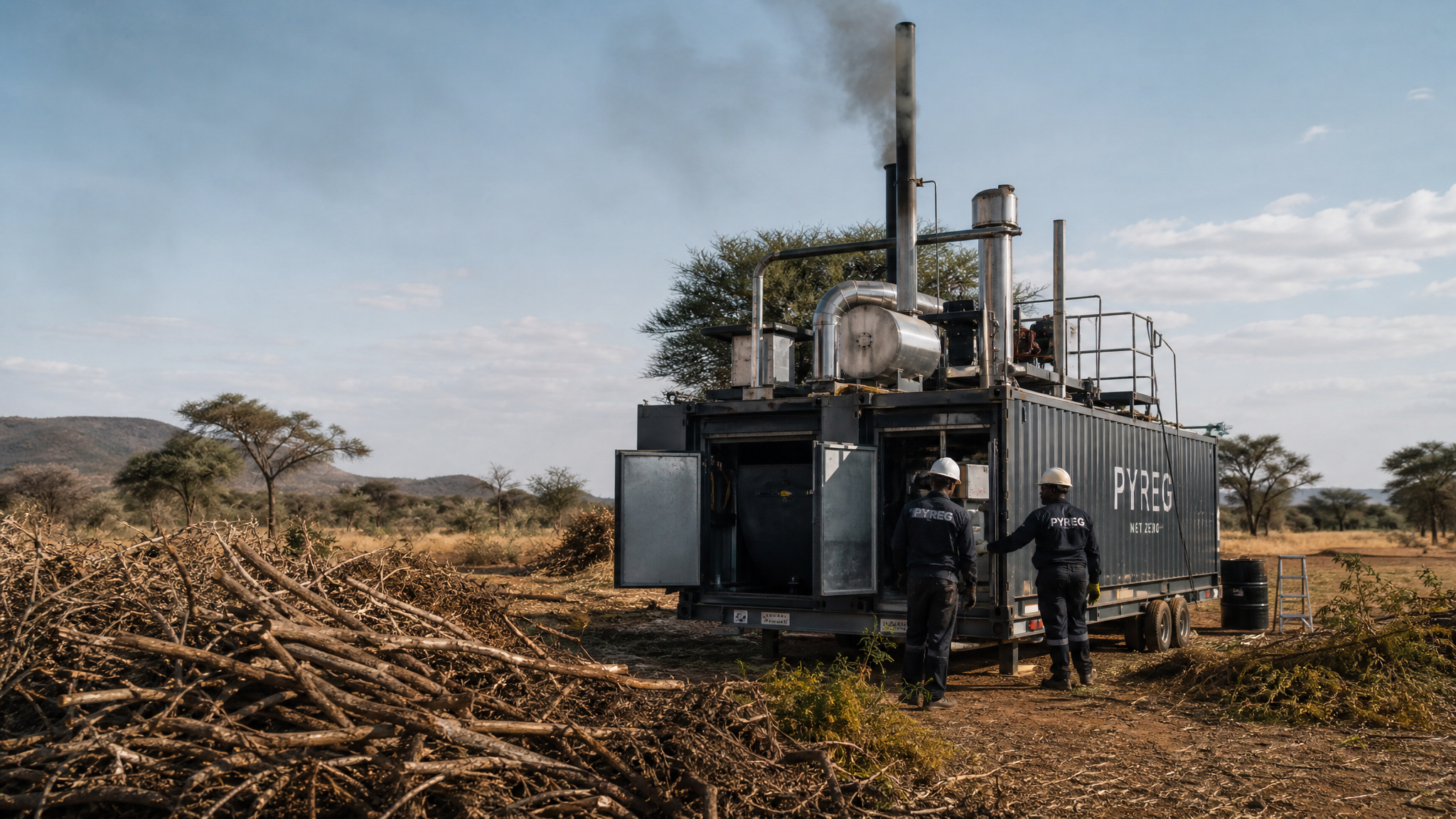
Terrestrial Biomass Storage
Removing invasive woody biomass from the Fish River system and locking it away in engineered terrestrial storage cells — displacing fire and decay with durable carbon retention.
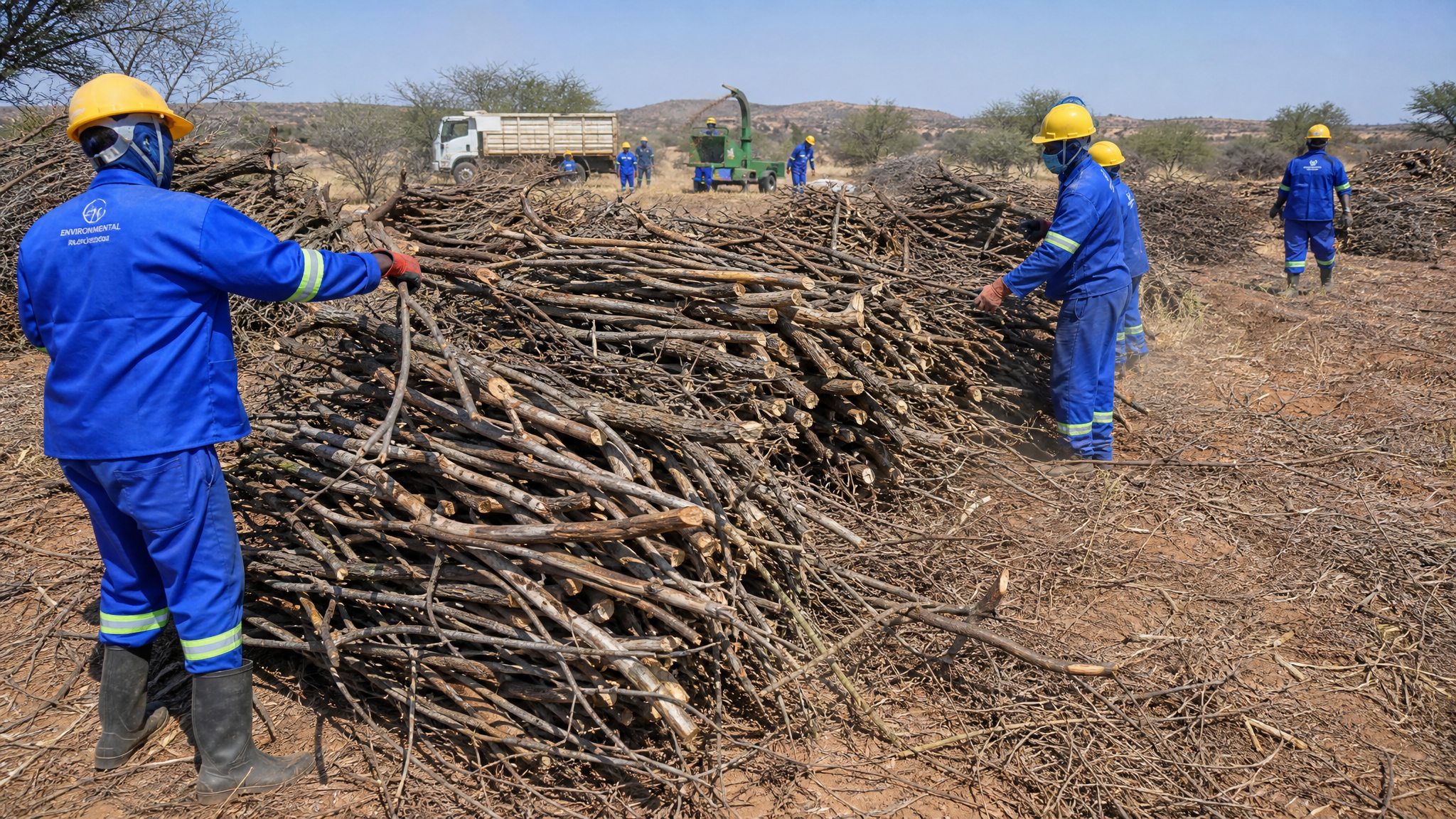
Decentralised by design
Our approach focuses on the Fish River system in southern Namibia, where invasive Prosopis and reeds choke waterways, increase flood risk, and degrade grazing land. Instead of burning this biomass — releasing stored carbon back into the atmosphere — we recover it and seal it in engineered terrestrial storage cells.
Terrestrial Biomass Storage (TBS) displaces the natural decomposition and fire cycle by sealing woody biomass in oxygen- and moisture-controlled cells, preventing carbon release for centuries. This follows the Rainbow Standard Methodology for Terrestrial Biomass Storage.
Pilot plan
Our Phase 1 deployment — terrestrial biomass storage in the Hardap region.
Location
Fish River, Hardap, Namibia
Timeline
Phase 1 pilot — feasibility
Target capacity
3,000 tCO₂e / year
Financing ask
$1.5M – $2M
Operational model
Three clear steps from invasive biomass to verified carbon removal.
Source
Recovering invasive woody biomass (Prosopis and reeds) from the Fish River system that would otherwise be burned or left to rot.
Store
Placing biomass in engineered terrestrial storage cells, sealed to prevent moisture and oxygen from triggering decomposition.
Monitor & Verify
Utilising continuous sensor telemetry and independent third-party audits to verify storage integrity before credits are issued.
Indicative CAPEX & use of funds
How Phase 1 financing is allocated across the TBS pilot.
| Category | What it covers |
|---|---|
| Equipment | Biomass harvesting & handling machinery, storage cell construction, sensor and telemetry systems |
| Operations | Field crews, fuel, maintenance, SME contracts, site preparation and logistics |
| MRV | Sensor deployment, monitoring software, third-party verification, Rainbow Standard compliance |
| Permits | Environmental clearances, land-use agreements, invasive species removal permits |
Detailed cost breakdown available in the teaser deck — request access via contact.